
She said her monument would be in her students' work. Augusta Savage built a generation of Harlem artists, while much of her own sculpture was lost.





In January 1935, Augusta Savage told Metropolitan Magazine, "I have created nothing really beautiful, really lasting, but if I can inspire one of these youngsters to develop the talent I know they possess, then my monument will be in their work." She was forty-two and running a free art studio in Harlem, and the young people around her would prove her right. What she couldn't know yet was that the largest work of her life was still ahead of her, and that it wouldn't survive.
Imagine walking through the New York World's Fair in the summer of 1939 and coming upon a harp sixteen feet tall, made entirely of people. Twelve Black singers in long robes stood in a row, tallest to smallest, to form its strings, while behind them a great arm and open hand rose up as the sounding board, and at the base a young man knelt, holding out a sheet of music. Augusta Savage named the sculpture Lift Every Voice and Sing, after the song whose words James Weldon Johnson wrote, though the fair's organizers renamed it The Harp, and that's the title printed on the souvenir postcards.
In many ways, that loss mirrors her whole career, since Savage spent her life making room for other artists while her own work kept slipping away, and many of the young people she taught grew into some of the most celebrated names in American art. To understand how her monument came to live in other people's work, it helps to begin where she began, with a handful of red clay.
Augusta Fells was born on February 29, 1892, in Green Cove Springs, Florida, and as a little girl she would dig into the red clay near her home and shape it into small animals. Her father, a Methodist minister, saw it as idle play. "My father licked me four or five times a week," she later recalled, "and almost whipped all the art out of me." The clay animals kept coming anyway. Her early adult years moved quickly and brought real loss, as she got married at fifteen, welcomed her only child, Irene, the following year, and lost her husband just a few years later. In West Palm Beach she found good clay, people who encouraged her, and her first prizes, along with a second marriage that gave her the name Savage, which she kept long after it ended. When her hope of earning a living from portrait busts in Jacksonville didn't work out, she made a hard choice and, leaving Irene in her parents' care, headed north to study art.
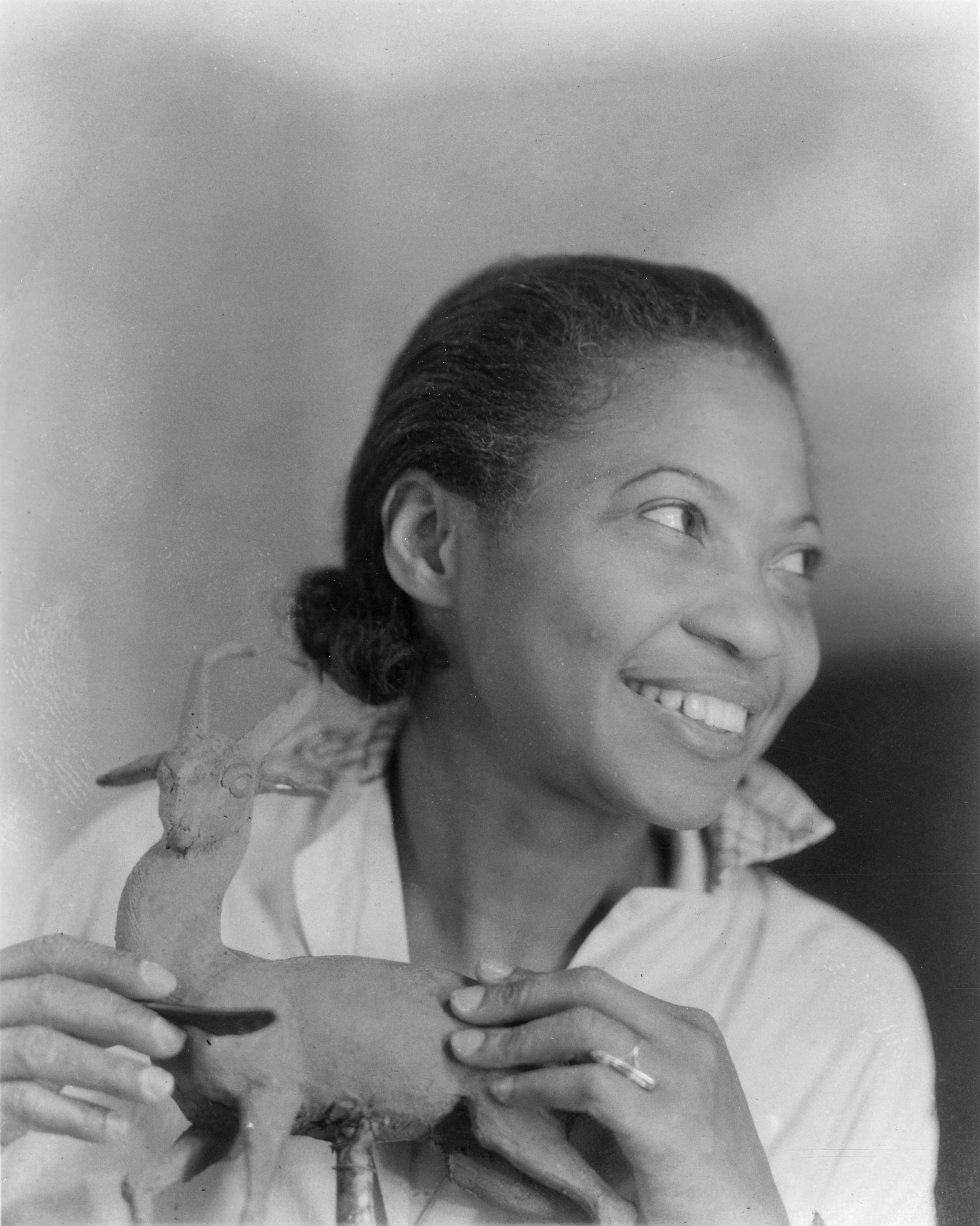
She arrived in New York in 1921 with $4.60 and a letter of recommendation to the sculptor Solon Borglum, just as Harlem was becoming the heart of Black cultural life in America. Borglum's school was beyond her means, so he pointed her toward Cooper Union, which charged no tuition. Cooper Union accepted her into its four-year sculpture program, and her instructors, seeing her talent, waived so many classes that she finished in three years, all while supporting herself as an apartment caretaker.
Then, in 1923, came the moment that made her name known far beyond the classroom, when she was chosen as one of about a hundred American women for a summer art program at Fontainebleau, outside Paris, until the selection committee learned she was Black and withdrew the offer. Savage, refusing to absorb that quietly, wrote to the New York World to defend her right to compete, while W. E. B. Du Bois wrote to every member of the committee on her behalf, and soon the story was spreading through the press. Only one committee member, the sculptor Hermon A. MacNeil, spoke against the decision, and he invited her to study with him. The scholarship never came back, but the episode marked her publicly as someone who would answer injustice in the open, and that reputation stayed with her for the rest of her life.
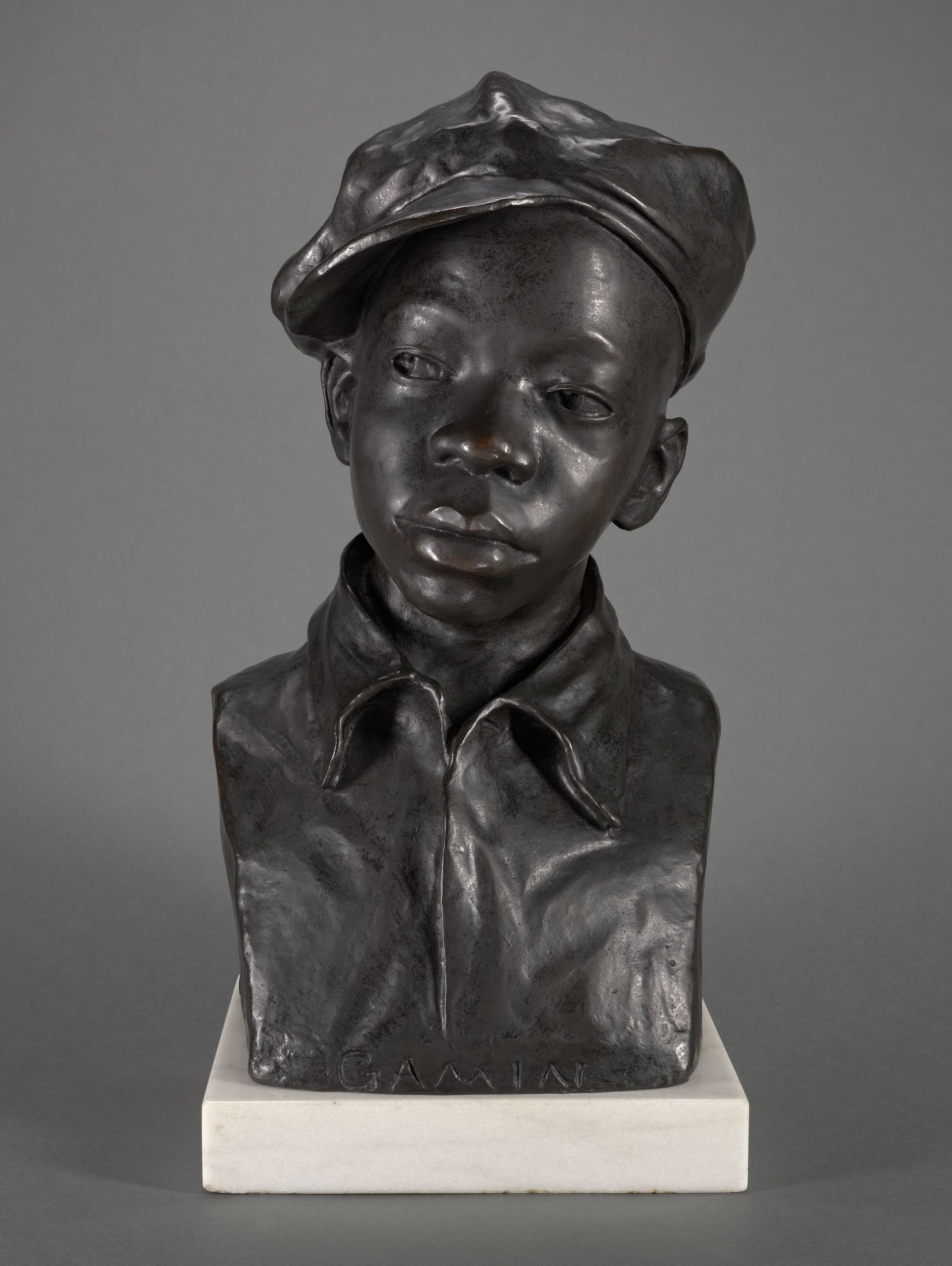
The years that followed asked a great deal of her. Her third husband, Robert L. Poston, died in 1924. Back in Florida, a stroke left her father paralyzed and a hurricane destroyed the family home, so nine members of her family came north and moved into her small apartment on West 137th Street. She took work in steam laundries to support them all and to save for study abroad. Through all of it, she kept sculpting, and her portrait busts of Du Bois and Marcus Garvey drew praise for their strength. Around 1929 she modeled Gamin, a bust of a boy with his cap pulled low and a steady, knowing look, whom recent research identifies as her nephew. That one small sculpture, modeled on a child from her own family, helped earn her a Julius Rosenwald Fellowship, the first the fund awarded to a visual artist. In 1929 she finally reached Paris. She trained at the Académie de la Grande Chaumière, had two works accepted for the Salon d'Automne, and showed her sculpture at the Grand Palais. A second Rosenwald fellowship let her stay another year, and a Carnegie grant paid for eight months of travel through France, Belgium, and Germany. Six years after Fontainebleau turned her away, Paris made room for her.
When Savage came home from Paris in 1932, the Great Depression had settled over the country, and almost no one was buying art. So she did what she would do again and again in her life and turned toward the people around her. In 1932 she opened the Savage Studio of Arts and Crafts in Harlem, where anyone who wanted to learn could come in for free, and where her older students soon began teaching the younger ones. Picture a teenage Jacob Lawrence walking through that door, along with Gwendolyn Knight, Norman Lewis, Ernest Crichlow, William Artis, and the photographers Morgan and Marvin Smith, each of whom went on to build a career of their own. Kenneth B. Clark, who would later become a renowned psychologist, learned in her studio as well. Her influence reached beyond those walls, too. In 1934 she became the first African American elected to the National Association of Women Painters and Sculptors, and she fought, and won, for Black artists to be hired on the Works Progress Administration's art projects, opening doors that had long been closed to them.
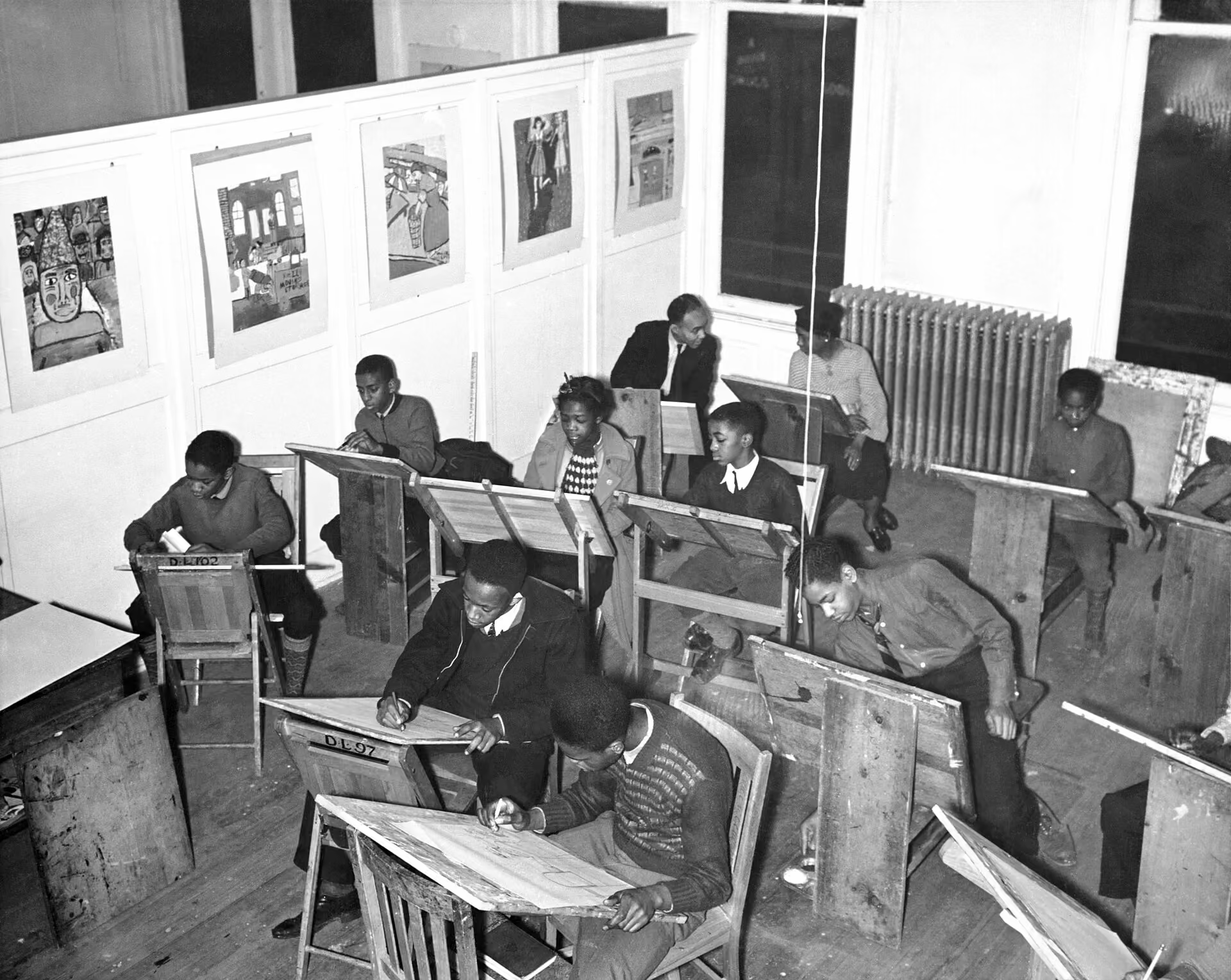
As the decade went on, her place in Harlem only grew, and in 1937 she became the first director of the Harlem Community Art Center, created under the WPA's Federal Art Project, and the work she did there helped lay the groundwork for other community art centers, including Chicago's South Side Community Art Center.
That same year, the New York World's Fair asked her to make a sculpture honoring what Black Americans had given the world's music. She was one of twelve women chosen to create work for the fair, and the only Black woman among them. Her fee was $360. She knew what she wanted to make. Her friend James Weldon Johnson and his brother, J. Rosamond Johnson, had written "Lift Every Voice and Sing" for a Lincoln's Birthday celebration at a Jacksonville school in 1900. It came from the same Florida city where she'd once tried to earn a living from her art, and by now it was sung across the country as the Black national anthem. She built her sculpture from the spirituals and hymns behind it, a choir standing in for the strings of a harp. Johnson died in 1938, so he never saw it.
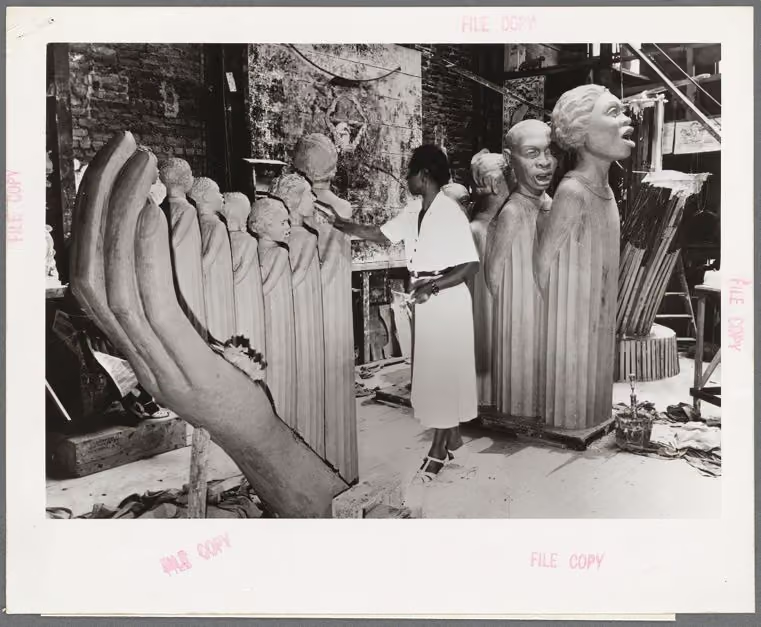
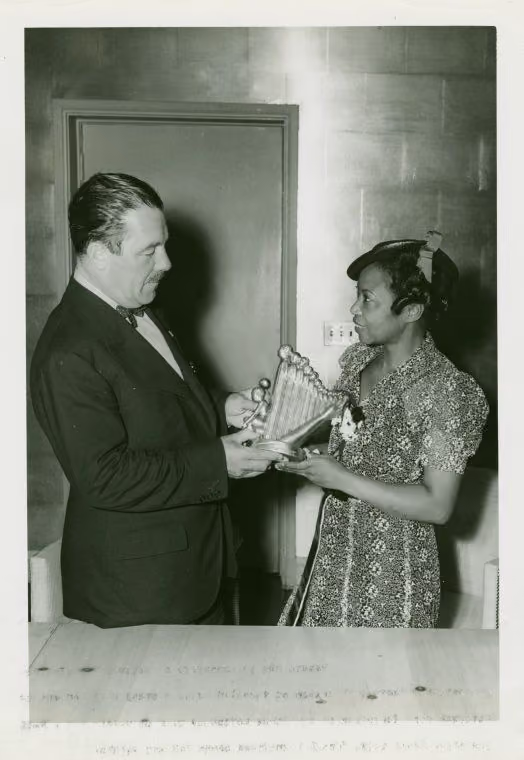
To make it, she took leave from the Harlem Community Art Center and gave the sculpture about two years. Bronze was out of reach, so she built it in plaster and had it lacquered black to look like basalt, hoping to raise the money to cast it properly later. When the fair opened in April 1939, the sixteen-foot work stood in the courtyard of the Contemporary Arts Building, and people stopped. The Baltimore Afro-American reported that nearly everyone who walked past had something to say about it. Small metal replicas sold as souvenirs, and Savage presented one to Grover Whalen, the fair's president. A photograph of that moment survives. That same year, she opened the Salon of Contemporary Negro Art in Harlem, a gallery devoted to work by Black artists. It didn't last long, but it carried the purpose that ran through all her work, giving Black artists a place to be seen.

When the fair closed in the fall of 1940, there was still no money to cast the plaster, or even to move and store it, and a bulldozer cleared it away with the rest of the grounds. It was the largest thing she ever made, and it stood for about eighteen months. Savage came back to Harlem to find that her post at the Art Center had gone to someone else. She never received another major commission.
In 1945, Savage left Harlem behind and settled into a small house at the end of a dirt drive in Saugerties, in New York's Hudson Valley. Money troubles and disappointment played a part. The historian Jill Lepore has found another reason. The writer Joe Gould had fixed on Savage after meeting her at a poetry reading in 1923, and for years he harassed and stalked her. For decades, accounts of her life described these years as a full retreat from art, and some still do, but local research tells a fuller story. Her neighbors called her Gus. She raised chickens, relied on kerosene lamps for light, and turned an old chicken coop into a studio, where she went right on sculpting and painting, and taught art to the local children who came to visit. Friends came up from Harlem for late-night gatherings, and a local businessman, Herman Knaust, hired her to tend mice in his cancer research laboratory. She also gave poetry readings at his estate on the Hudson, where, as the story goes, she recited Shakespeare's sonnets from memory. Savage died in New York City on March 26, 1962, and decades later, in 2000, the local historical society honored her time there with an exhibition of nine works she made in Saugerties.
As for why she faded from view, part of the answer is material, because bronze casting was expensive, and much of what she made stayed in plaster or clay, which cracks, crumbles, and eventually gets cleared away. The art historian Theresa Leininger-Miller, who is writing Savage's biography, estimates that about 70 of her roughly 160 documented works are now lost. Part of it is the record she left behind, which is thin, since she kept few letters, and Lepore's research suggests that Savage, worn down by Gould, destroyed many of her own papers and some of her art. And part of it lies in the shape of her generosity, because the years she poured into teaching and organizing live on inside other people's careers, where they're easy to miss. When Jacob Lawrence's paintings hang in a museum, her name isn't on the wall label, yet her studio is part of how he got there.
Slowly, that record is being repaired. In 2017, the filmmaker Aviva Kempner wrote in The New York Times that if new monuments were to rise where Confederate statues had stood, The Harp should be first on the list. From 2018 to 2020, a touring exhibition called Augusta Savage: Renaissance Woman, organized by the Cummer Museum of Art & Gardens in Jacksonville, and shown at New-York Historical among other venues, gathered her surviving sculptures and brought them to new audiences. In Harlem, the Schomburg Center for Research in Black Culture holds one of the souvenir replicas of The Harp, and in 2021 Jacksonville announced plans for a copy in its Lift Ev'ry Voice and Sing Park. And in Saugerties, Richard Duncan, who bought her old house in 1999, spent years restoring it with local historian Karlyn Knaust Elia.
The Harp was made to last a single season, but what Augusta Savage built in Harlem has lasted far longer, in the artists she trained, the doors she pushed open, and the few sculptures that made it through. Most of those surviving pieces are small, and they're worth seeing in person, where you can stand close enough to meet the steady gaze of a boy she modeled almost a century ago.
Only a small number of Augusta Savage's sculptures survive, and they're held in a handful of museums and archives. Gamin survives in more than one version, and each of these museums holds its own: the Schomburg Center for Research in Black Culture in Harlem, the Cleveland Museum of Art, and the Smithsonian American Art Museum in Washington, D.C. Souvenir replicas of The Harp are held by the Schomburg Center for Research in Black Culture in Harlem and the Columbus Museum in Georgia. Gallery displays change, so check each museum's website to see what's on view before you visit.
Who was Augusta Savage? Augusta Savage (1892 to 1962) was an American sculptor and teacher of the Harlem Renaissance. She's known for Gamin, The Harp, her free art studio in Harlem, and her years as the first director of the Harlem Community Art Center.
What did Augusta Savage say about her legacy? In 1935, she told Metropolitan Magazine that if she could inspire young artists to develop their talent, "then my monument will be in their work." Many of the students she taught went on to become celebrated American artists.
Which artists did Augusta Savage teach? Her students included Jacob Lawrence, Gwendolyn Knight, Norman Lewis, Ernest Crichlow, William Artis, and the photographers Morgan and Marvin Smith. The psychologist Kenneth B. Clark also studied in her studio.
What was The Harp, and what happened to it? The Harp was Savage's sixteen-foot sculpture for the 1939 New York World's Fair. She titled it Lift Every Voice and Sing, after the song by James Weldon Johnson and J. Rosamond Johnson, and shaped twelve robed singers into the harp's strings. She built it in plaster finished in black, hoping to cast it in bronze later. When the fair closed in 1940, there was no money to cast, move, or store it, and it was bulldozed. Photographs, postcards, and small souvenir replicas survive.
Why did Augusta Savage move to Saugerties? In 1945 she left Harlem for Saugerties, in New York's Hudson Valley. Money troubles and disappointment played a part, and the historian Jill Lepore has found that the writer Joe Gould harassed and stalked her for years. In Saugerties she kept sculpting and painting in a studio she made from a chicken coop, and she taught local children.
Why is Augusta Savage less known than her students? Much of her work stayed in plaster or clay and didn't survive. Her biographer, Theresa Leininger-Miller, estimates about 70 of her roughly 160 documented works are lost. She also left few papers, and she spent much of her career teaching and organizing on behalf of other artists.
Lift Every Voice and Sing (The Harp), New York World's Fair postcard, 1939 (detail). Curt Teich & Co. Courtesy Emory University Libraries.
Photograph of Augusta Savage. Harmon Foundation Collection, National Archives and Records Administration (NAID 559182). Unrestricted use. View at the National Archives
Augusta Savage, Gamin, about 1929. Schomburg Center for Research in Black Culture, Art and Artifacts Division, The New York Public Library. View at The New York Public Library
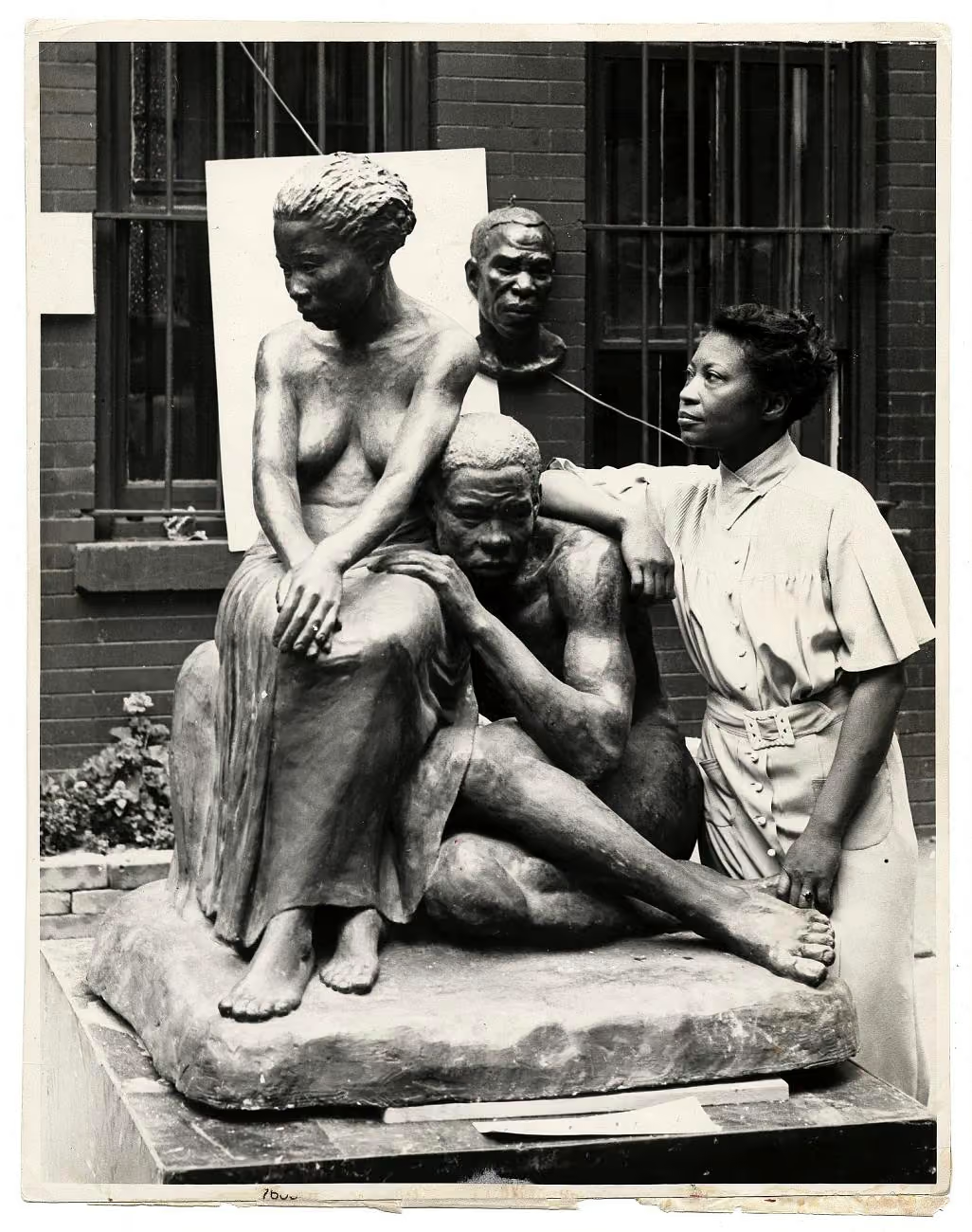
Andrew Herman, Augusta Savage with Her Sculpture Realization, 1936. Federal Art Project, Photographic Division collection, Archives of American Art, Smithsonian Institution.
David Robbins, Students at the Harlem Community Art Center, 1938. Works Progress Administration, Federal Art Project, Archives of American Art, Smithsonian Institution. Public domain. View on Wikimedia Commons
Art – Sculpture – Harp (Augusta Savage) – Harp. New York World's Fair 1939–1940 records, Manuscripts and Archives Division, The New York Public Library. Public domain. View at The New York Public Library
Underwood & Underwood, The Harp (Art – Sculpture – Harp (Augusta Savage) – Harp), at the New York World's Fair, 1939. New York World's Fair 1939–1940 records, Manuscripts and Archives Division, The New York Public Library. Public domain. View at The New York Public Library
Art – Sculpture – Harp (Augusta Savage) – Augusta Savage presenting model to Grover Whalen. New York World's Fair 1939–1940 records, Manuscripts and Archives Division, The New York Public Library. Public domain. View at The New York Public Library